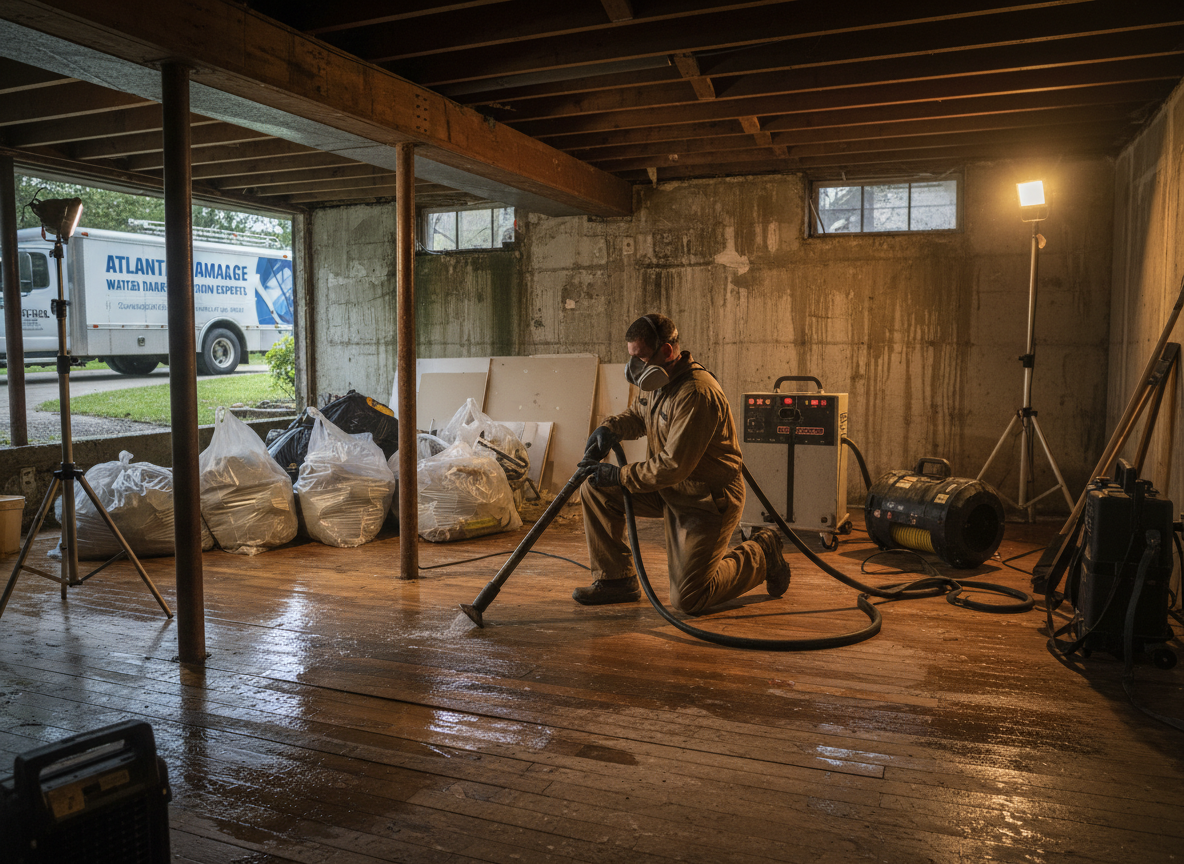
Atlanta's older housing stock in neighborhoods like Virginia-Highland and Old Fourth Ward often features plaster walls and crawl spaces that trap moisture after leaks. These materials absorb water differently than modern drywall, requiring extended drying times and moisture mapping to prevent hidden mold growth during the city's humid summers. Fulton County disposal rules also affect how saturated debris is handled on jobs.
Summer thunderstorms and occasional winter pipe bursts create distinct repair challenges across East Atlanta and West End. High humidity slows evaporation, so dehumidifiers must run longer than in drier climates, and nearby Decatur properties with clay-heavy soil see more foundation seepage after heavy rains. Technicians check for hidden saturation behind cabinetry and under flooring before closing walls.
Repairs in Inman Park and Piedmont Park-adjacent homes frequently involve matching historic trim and flooring while meeting current building codes on vapor barriers. Skipping these steps leads to recurring issues when mild winters give way to spring humidity spikes. Proper documentation of affected zones helps homeowners with insurance claims common in Fulton County.
Service calls often start with a site visit to 208 Rocky Ford Rd NE properties or nearby areas, where crews assess both visible damage and moisture levels in subfloors. This prevents callbacks that occur when only surface water is addressed in Atlanta's variable weather patterns.
Technician insight
In Atlanta the thing that catches most people out with Water Damage Repair is hidden moisture in the plaster and lathe of 1920s Grant Park or Inman Park homes. The humid subtropical climate keeps those walls damp long after the visible water is gone, and mild winters mean homeowners often skip checks until mold appears. Checking behind baseboards and under original hardwood is the step that changes the outcome.
Hidden Moisture After Pipe Burst in Virginia-Highland
A homeowner noticed ceiling stains after a second-floor leak. Inspection revealed saturation in plaster walls and subfloor that had spread into the crawl space. Crews extracted water, ran drying equipment for several days, then replaced affected sections while preserving original trim details.
Water Damage Repair Services We Offer
✓Basement Water Extraction
Removes standing water from Fulton County basements after storms or pipe failures, followed by drying to protect structural wood in older East Atlanta homes.
✓Ceiling Leak Repairs
Addresses water intrusion from roof or plumbing leaks common in Midtown and Buckhead multi-story houses, preventing damage to plaster and electrical systems.
✓Flooring and Subfloor Restoration
Repairs hardwood and tile damage in Grant Park and Inman Park properties where moisture migrates under surfaces due to humid conditions.
✓Crawl Space Drying and Sealing
Targets hidden moisture in Virginia-Highland and West End crawl spaces that persists through mild winters and fuels mold during summer humidity.
✓Sewage Backup Cleanup
Handles contaminated water removal in Sandy Springs and Decatur homes, including disinfection to meet local health standards after heavy rains.
Water Damage Repair Cost in Atlanta, GA
| Service | Typical Range | What Affects It |
|---|---|---|
| Initial Moisture Assessment | $150–$300 | Depends on property size and number of affected rooms in areas like Midtown. |
| Emergency Water Extraction | $400–$900 | Higher for sewage or when access is limited in older crawl spaces. |
| Drying Equipment Rental | $250–$600 | Extends with humidity levels typical after Atlanta summer storms. |
| Subfloor Or Drywall Repair | $600–$1,800 | Varies by material type and whether historic finishes must be matched. |
Ranges are typical for Atlanta, GA and confirmed with an exact written quote before any work starts.
How it works
- 1
Initial Assessment
Technicians inspect the property in neighborhoods like Buckhead or Old Fourth Ward, mapping moisture with meters and identifying affected materials.
- 2
Water Removal
Pumps and extractors clear standing water while protecting nearby structures common in Fulton County's older housing.
- 3
Drying And Dehumidification
Industrial equipment runs until readings confirm safe levels, accounting for Atlanta's high summer humidity that prolongs the process.
- 4
Repair And Restoration
Damaged drywall, flooring, and trim are replaced or refinished to match original construction details.
Pricing
Pricing varies by water volume, affected square footage, and materials; most jobs begin with an assessment visit.