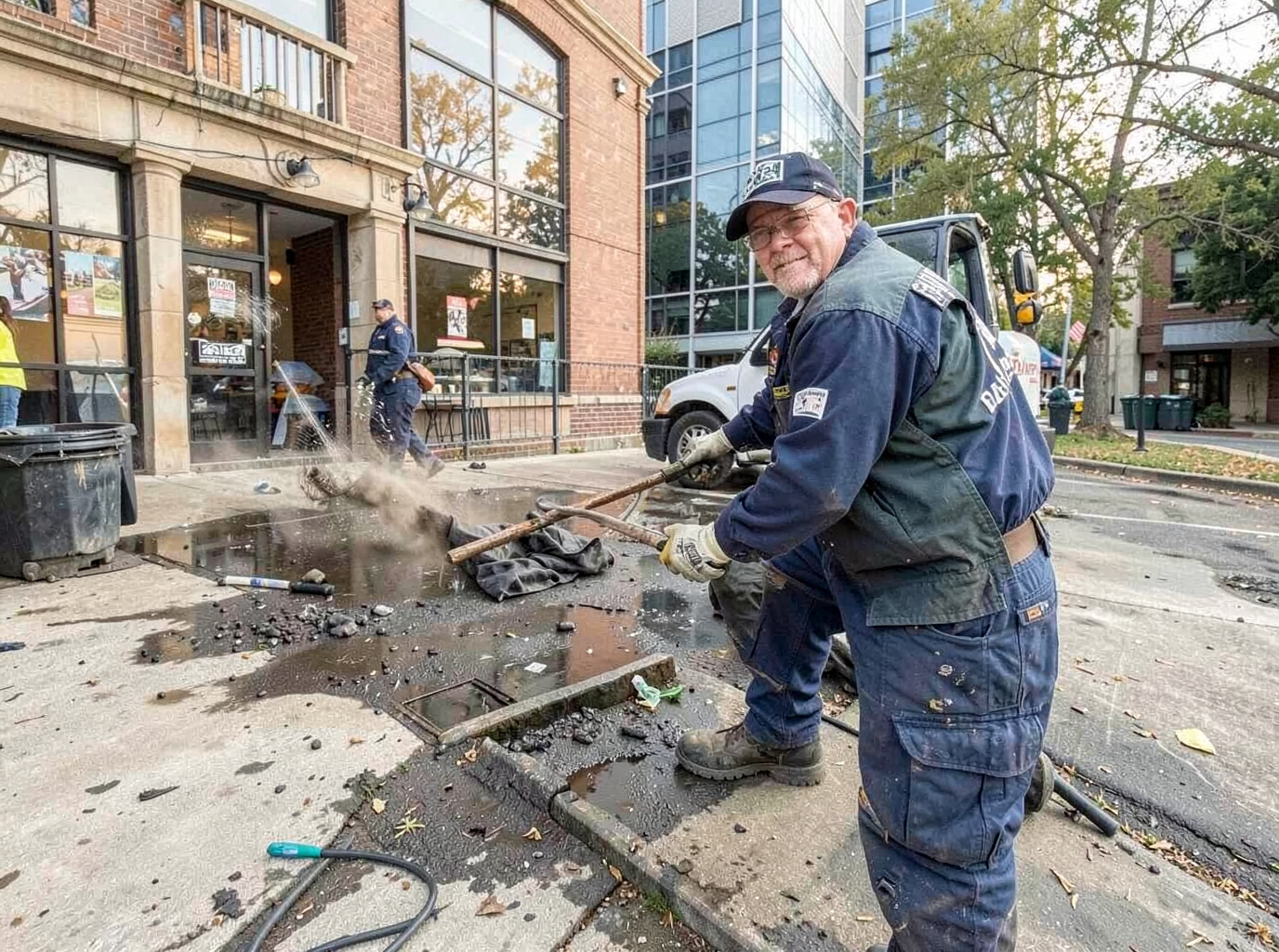
Atlanta's humid subtropical climate brings heavy summer rains and occasional winter pipe bursts that quickly saturate older brick and frame homes in neighborhoods like Inman Park and Virginia-Highland. These structures often have crawl spaces and plaster walls that trap moisture, so extraction must reach hidden pockets before mold sets in within 48 hours. Crews use moisture meters on lath-and-plaster and subflooring to map saturation that standard fans miss.
Fulton County properties near the Atlanta BeltLine and Piedmont Park sit on clay-heavy soils that hold water against foundations during downpours. Cleanup crews frequently cut baseboards and drill weep holes in Grant Park and Old Fourth Ward basements to release trapped water before negative air machines can pull humidity below 50 percent. This step prevents recurring musty odors common in East Atlanta's 1920s bungalows.
Nearby Decatur and Sandy Springs homes with finished basements require careful handling of HVAC returns that can spread spores county-wide. Technicians isolate affected zones, remove saturated carpet padding, and place commercial dehumidifiers sized for 2,000-plus square feet to finish drying within three to five days even during peak humidity.
Work in Midtown high-rises and Buckhead condos adds the complication of shared walls and slab leaks that travel between units. Cleanup includes documenting moisture migration for insurance adjusters while protecting common-area finishes that Fulton County building codes require to remain intact during repairs.
Technician insight
In Atlanta the thing that catches most people out with Water Damage Cleanup is how fast humidity re-soaks plaster and subfloors once the visible water is gone, especially in 1920s homes in Inman Park and Virginia-Highland where clay soil keeps moisture against the foundation.
Buckhead Condo Slab Leak
Water from a second-floor slab leak migrated into the unit below and saturated engineered flooring and drywall. Extraction removed the standing water, but moisture readings stayed high in the shared wall. Targeted drying with wall cavities opened and dehumidifiers running for four days brought levels below threshold without affecting neighboring units.
Water Damage Cleanup Services We Offer
✓Emergency Water Extraction
Rapid removal of standing water from basements and first floors using truck-mounted pumps before humidity in Fulton County drives secondary damage.
✓Structural Drying and Dehumidification
Placement of commercial air movers and dehumidifiers calibrated for Atlanta's humid summers to dry plaster, subfloors, and framing in older Virginia-Highland homes.
✓Crawl Space Water Cleanup
Pumping and drying of flooded crawl spaces common under Inman Park and Grant Park bungalows where clay soil keeps moisture against joists.
✓Carpet and Pad Removal
Cutting and disposal of saturated carpet and padding in East Atlanta and West End properties to stop mold growth in humid conditions.
✓Content Drying and Cleaning
Moving, drying, and cleaning furniture and belongings from Midtown apartments and Buckhead condos affected by slab leaks or roof failures.
Water Damage Cleanup Cost in Atlanta, GA
| Service | Typical Range | What Affects It |
|---|---|---|
| Initial Assessment And Extraction | $350–$850 | Varies with water depth and access in older Fulton County crawl spaces. |
| Full Structural Drying | $800–$2,200 | Driven by square footage and how long dehumidifiers must run during summer humidity. |
| Crawl Space Cleanup | $600–$1,400 | Includes pumping and drying; higher in clay-soil neighborhoods like Grant Park. |
| Content Drying | $300–$900 | Depends on volume of items and whether ozone treatment is needed. |
Ranges are typical for Atlanta, GA and confirmed with an exact written quote before any work starts.
How it works
- 1
On-Site Assessment
Technicians arrive from the 208 Rocky Ford Rd NE base and use moisture meters plus thermal imaging to locate hidden water in Fulton County homes.
- 2
Water Removal
Pumps and extractors pull standing water from floors, walls, and crawl spaces before humidity rises further.
- 3
Drying Setup
Air movers and dehumidifiers are positioned and monitored daily until readings drop below 50 percent relative humidity.
- 4
Final Moisture Check
Walls, floors, and contents are retested; any remaining wet materials are documented for removal or repair.
Pricing
Cost depends on affected square footage, water category, and drying duration required by local humidity levels.