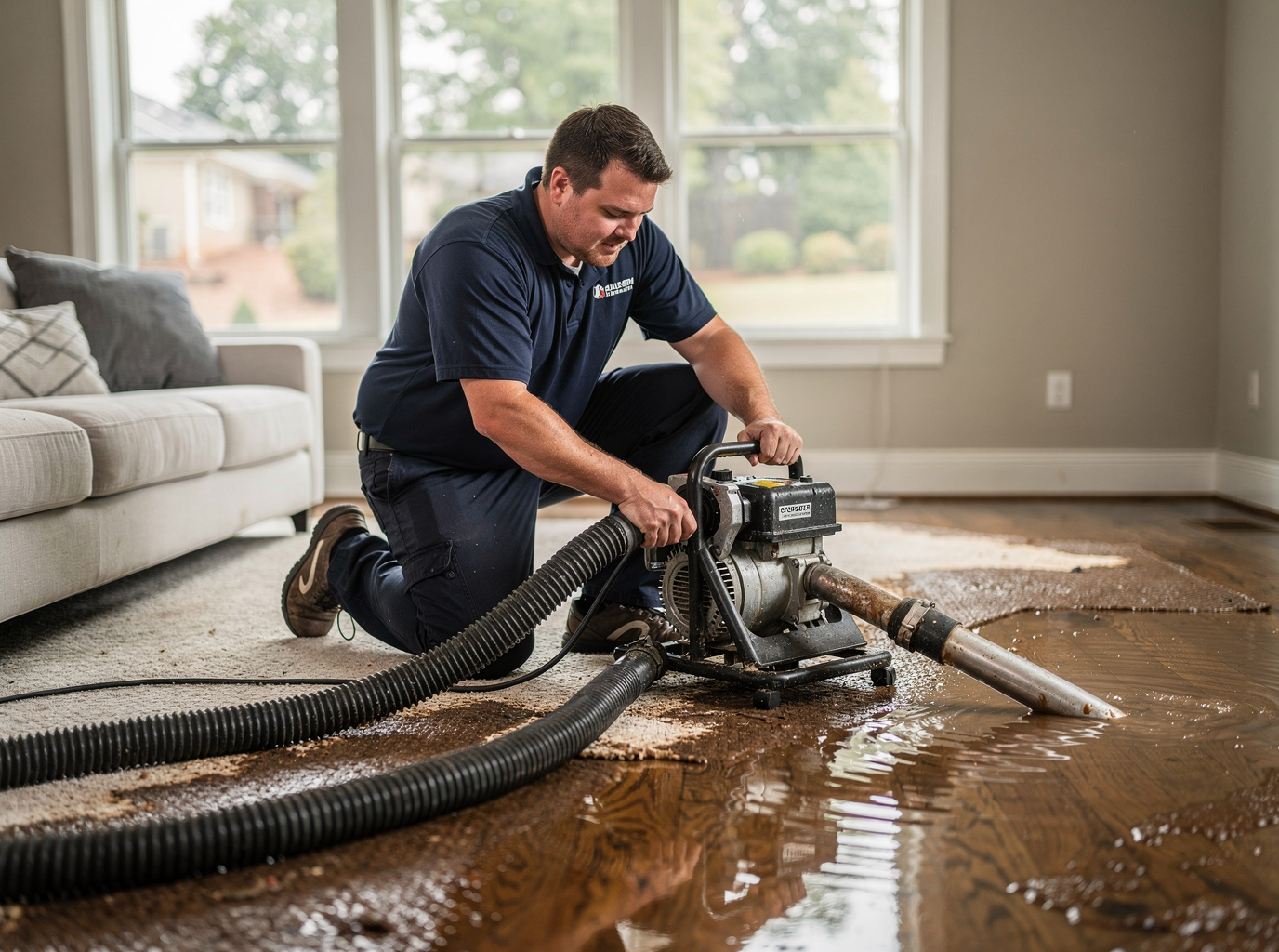
Atlanta's humid subtropical climate brings sudden summer downpours that overwhelm older drainage in neighborhoods like Virginia-Highland and Grant Park. Many homes built before 1960 have crawl spaces or partial basements that fill quickly when rain runs down the red clay hills. Technicians must pull water before it reaches hardwood floors or lath-and-plaster walls, because moisture trapped behind those materials leads to hidden mold within 48 hours.
Fulton County properties near the Atlanta BeltLine often sit on sloped lots where runoff enters through foundation cracks or low window wells. Emergency crews use truck-mounted extraction units first, then place air movers and dehumidifiers sized for the square footage. In East Atlanta and Old Fourth Ward bungalows, narrow hallways and finished basements require smaller portable equipment to avoid damaging door frames or electrical outlets.
After extraction, crews check moisture readings in subfloors and behind baseboards using meters calibrated for Georgia humidity levels. If water reached carpet pad or insulation, those materials are removed the same day to prevent secondary damage. Homeowners in Sandy Springs and Decatur frequently see water travel under tile in laundry rooms; cutting and drying those areas on the spot stops the spread into adjacent rooms.
Technician insight
In Atlanta the thing that catches most people out with Emergency Water Removal is how fast water travels under the hardwood floors in pre-1950 homes in Inman Park and Virginia-Highland once it hits the red clay. Homeowners think a fan in the corner will fix it, but the moisture stays trapped against the joists and shows up weeks later as cupping boards.
Crawl Space Flood After Summer Storm
Heavy rain sent runoff into a 1920s bungalow crawl space in Grant Park. Water reached the HVAC ductwork and insulation. Crews extracted standing water the same afternoon, removed saturated insulation, and ran drying equipment for three days until joist readings dropped below 12 percent.
Emergency Water Removal Services We Offer
✓Basement Flood Extraction
Truck-mounted pumps remove standing water from Fulton County basements before it reaches electrical panels or HVAC systems common in older Midtown homes.
✓Crawl Space Water Removal
Targeted extraction and drying in low-access crawl spaces under Inman Park and Virginia-Highland houses where red clay soil holds moisture against joists.
✓Carpet and Pad Extraction
Immediate removal of saturated carpet and pad in living areas to stop wicking into hardwood floors found in Grant Park and East Atlanta bungalows.
✓Appliance Leak Cleanup
Rapid water extraction after washing machine or water heater failures that spread across laundry rooms in Buckhead condos and West End apartments.
✓Storm Runoff Extraction
Clearing water that enters through doors or windows during heavy summer rains along the Atlanta BeltLine corridor and Piedmont Park edges.
Emergency Water Removal Cost in Atlanta, GA
| Service | Typical Range | What Affects It |
|---|---|---|
| Single-room extraction and drying | $450–$850 | Higher when hardwood or plaster walls are involved |
| Basement or crawl space extraction | $650–$1,200 | Increases with depth and access restrictions in older homes |
| Multi-room storm runoff job | $900–$1,800 | Varies by square footage and how far water traveled |
| Appliance leak extraction | $350–$650 | Lower when limited to tile or vinyl floors |
Ranges are typical for Atlanta, GA and confirmed with an exact written quote before any work starts.
How it works
- 1
Arrival And Safety Check
Technician arrives within the service window, locates the water source, and shuts off power or gas where needed to protect occupants in the affected Fulton County home.
- 2
Standing Water Extraction
Truck-mounted and portable pumps remove bulk water from floors, then technicians document moisture levels in subflooring and walls before moving to drying.
- 3
Targeted Drying Setup
Air movers and dehumidifiers are placed according to the home's layout, with daily monitoring to track progress in humid Atlanta conditions.
- 4
Final Moisture Verification
Readings confirm materials are dry; any remaining wet insulation or pad is noted for removal before equipment is taken down.
Pricing
Cost depends on water volume, number of affected rooms, and whether carpet or insulation must be removed.