2026-11-09 · Derek Ellis
Inspecting for Hidden Water Damage After Atlanta Summer Storms
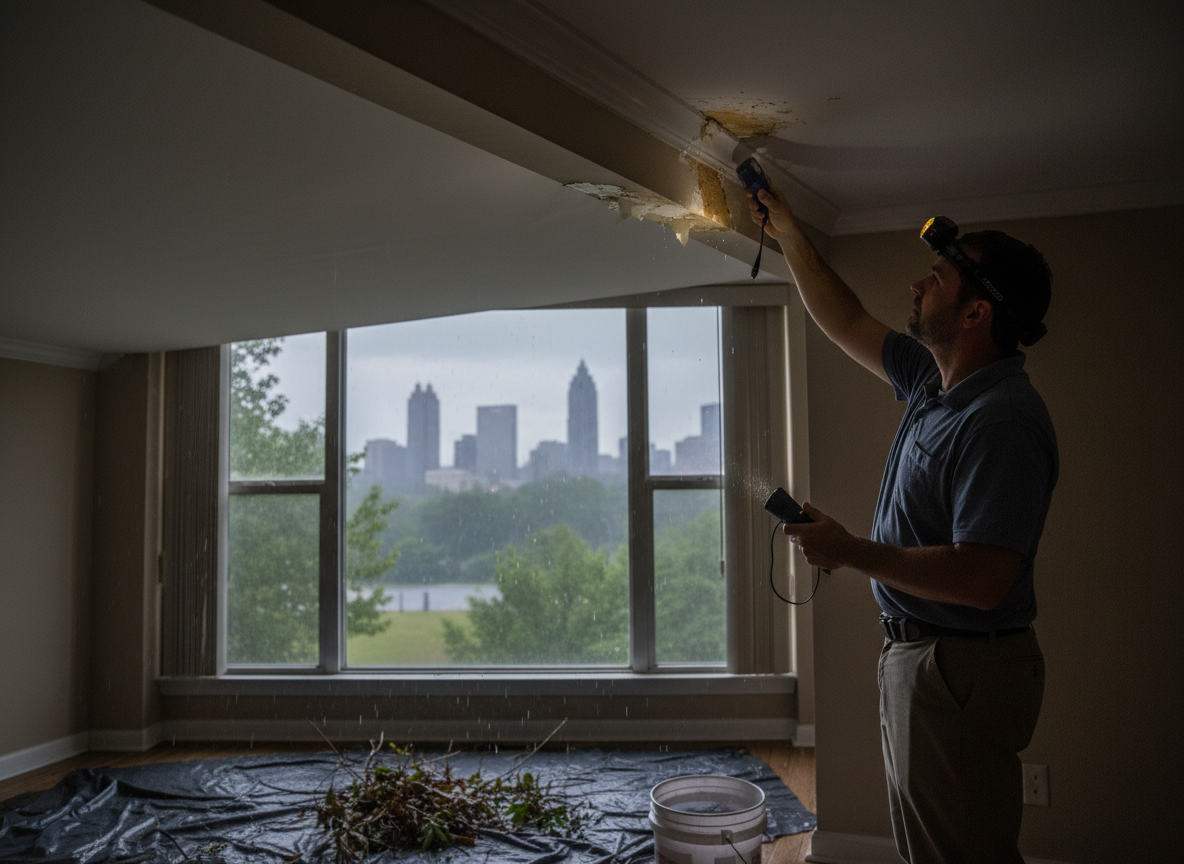
After Atlanta summer storms, hidden water damage frequently shows up in attics and crawl spaces of homes in neighborhoods like Midtown and Virginia-Highland within 24 to 48 hours, though full detection in older Fulton County stock may require checking walls and ceilings for up to a week.
Checking Attics and Roofs After Storms
Atlanta's hot summers and sudden downpours often push water under roof shingles on homes built before 1970 in areas such as Grant Park and Old Fourth Ward. Start by examining insulation for dark patches or musty odors that signal trapped moisture from wind-driven rain. Check rafters for soft spots where water pools near chimneys or vents, especially on the north-facing slopes common in these rolling neighborhoods. In Fulton County, tree cover around Piedmont Park and the Atlanta BeltLine can hide leaks until mold spreads. Use a flashlight to scan for drips along seams, and probe suspect areas with a moisture meter if available. Pay attention to ventilation fans that may have pulled humid air inward during the storm.
Inspecting Crawl Spaces and Foundations
Many homes in East Atlanta and West End sit on crawl spaces that collect runoff from the area's clay-heavy soil during humid months. After storms, enter these spaces and look for standing water or damp soil against foundation walls, which can wick moisture into floor joists. In neighborhoods like Inman Park, older brick piers often channel water toward sill plates, leading to hidden rot. Feel for spongy wood and note any white residue indicating mineral deposits from repeated wetting. The mild winters here do little to dry out these areas, so moisture lingers. Homeowners near Decatur should also check where downspouts empty close to the foundation, as redirected flow from heavy rains creates ongoing issues.
Spotting Damage in Walls and Ceilings
Interior signs appear first along baseboards in Buckhead and Midtown homes where summer storms overwhelm gutters. Look for bubbling paint, warped trim, or discoloration on drywall that matches roof lines above. In Grant Park properties with plaster walls, tap lightly to hear hollow sounds where water has separated layers. Ceilings near light fixtures often show rings from attic leaks that travel down electrical chases. Fulton County's older housing stock means many homes lack modern vapor barriers, allowing humidity to amplify small intrusions. Track any new cracks that form after storms, as shifting soil from saturation can stress framing.
Using Basic Detection Steps and Tools
Begin inspections 24 hours after rain stops to allow surfaces to reveal changes. Carry a moisture meter to test multiple spots in attics and under sinks, comparing readings room to room. Photograph everything and note dates, since patterns in Virginia-Highland homes often repeat near the same vents year after year. For deeper checks, remove a small section of baseboard in suspect areas to inspect subflooring. Residents in Sandy Springs can compare notes with neighbors whose homes share similar grading. Avoid relying solely on smell, as Atlanta's high humidity masks early mustiness until colonies grow.
For full Water Damage Restoration or targeted Water Damage Repair after these checks, see the details on handling older Atlanta homes in our guide to Budgeting for Water Damage Restoration in Older Atlanta Homes. Additional steps for moisture control appear in Preventing Crawl Space Moisture Issues During Atlanta's Humid Months.