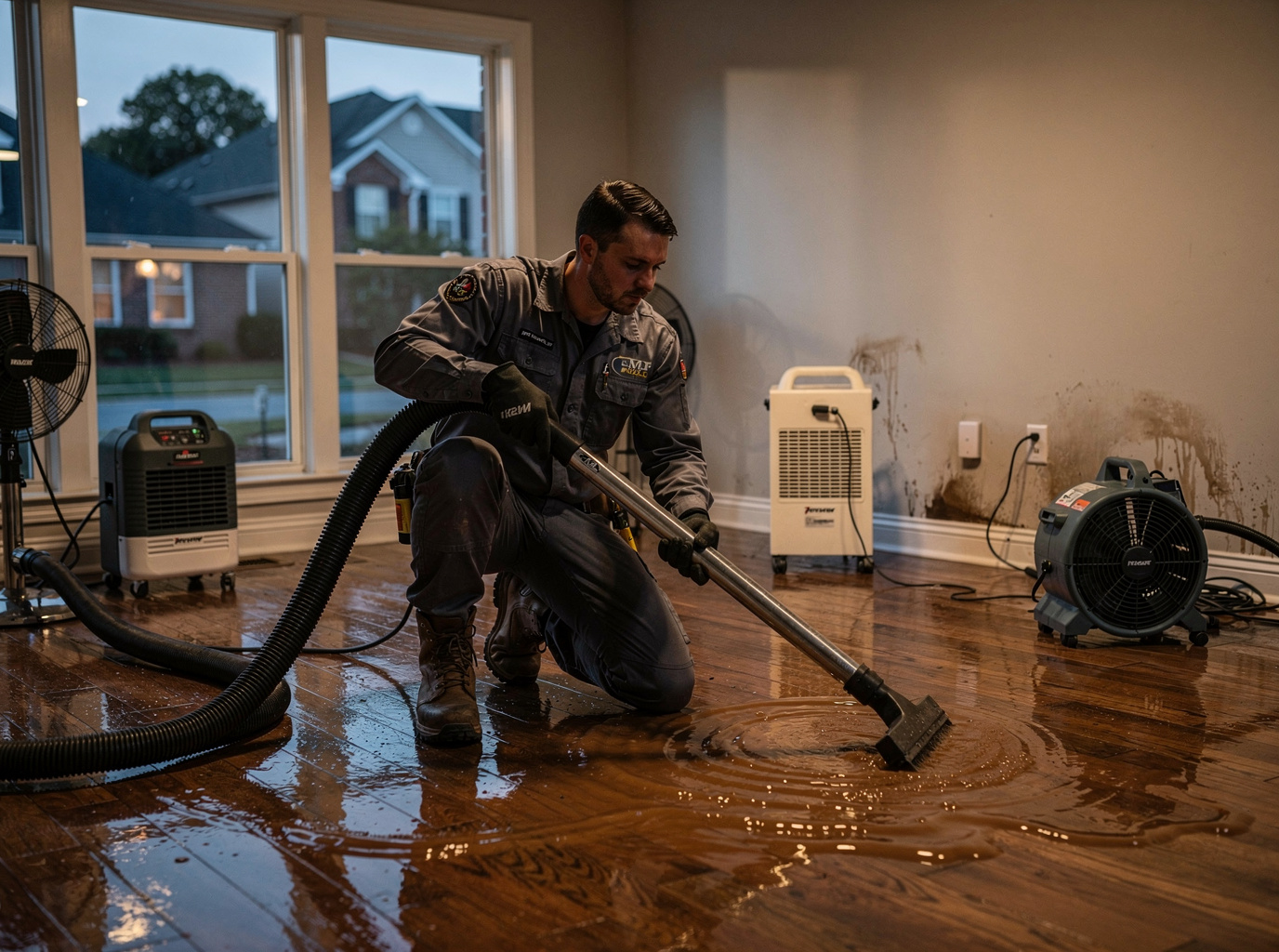
Avondale Estates homes built in the 1920s and 1930s sit on rolling lots that drain poorly after summer storms. When pipes burst or roofs leak, water moves quickly into crawl spaces and under the thick plaster walls common on streets like Avondale Road and Milton Avenue. Atlanta Water Damage Restoration pros based at 208 Rocky Ford Rd NE reach these addresses within minutes and set up drying before mold takes hold in the humid air.
Fulton County crews know the narrow driveways and mature tree roots that block access around Avondale Lake and the historic village center. Extraction and dehumidification gear must fit through side gates and basement stairs that newer subdivisions never have. Owner-operated teams work Mon–Fri 8am–6pm and Sat 9am–2pm to match the schedules of residents who commute to nearby Decatur and Sandy Springs.
Heavy rains push water across the shallow swales that line many Avondale Estates blocks. Older cast-iron drains under the sidewalks often fail first, sending flow into finished basements on North Avondale Road. Targeted drying and moisture mapping keep repairs limited to the affected rooms instead of whole-house rebuilds.
Around Avondale Estates
We regularly work near:
- 📍Avondale Lake
- 📍Avondale Estates Historic District
- 📍Avondale Road
- 📍Milton Avenue
- 📍Avondale Elementary School
- 📍North Avondale Road
Water Damage Restoration in Avondale Estates — Local Notes
- •1920s–1930s Tudor homes have brick and stucco exteriors that hide moisture behind the facade after pipe leaks.
- •Crawl spaces sit close to the water table on lots near Avondale Lake, so standing water appears within hours of heavy rain.
- •Narrow streets and mature oaks limit equipment placement around Avondale Elementary School and the village green.
- •Mild winters still allow hidden leaks to freeze and expand inside uninsulated walls on Milton Avenue.